What a Sub-Slab System Actually Does
The name describes the mechanism exactly. The system depressurizes the soil under your slab, so the pressure beneath the house is slightly lower than the pressure inside it. Soil gas takes the path of least resistance, and once that path is a pipe instead of a crack in the slab, radon leaves the property instead of entering the living space.
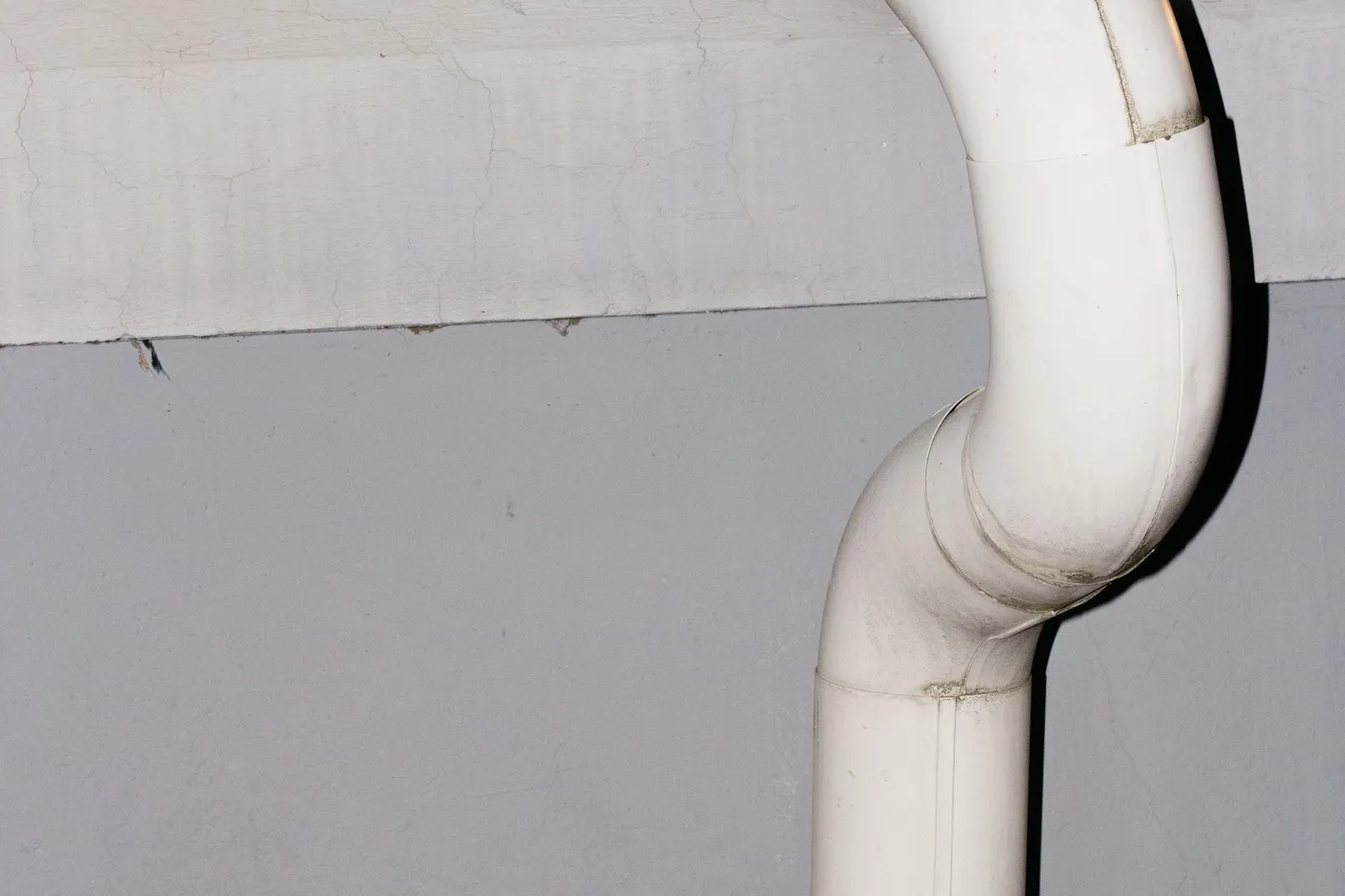
Physically it is four parts: a suction point cored through the slab into the gravel or soil below, PVC pipe carrying the gas up, an inline fan mounted outside the conditioned envelope, and a discharge terminating above the roofline. Everything else about the install is the judgment of where to put those four things.
Finding the Suction Point
This is the part that determines whether the system works, and it is the part homeowners never see.
A single suction point can only depressurize the area it can reach. How far it reaches depends on what is under the slab, and that varies enormously between Jacksonville homes. A slab poured over clean gravel lets the pressure field spread easily, and one point may cover the whole footprint. A slab poured directly on compacted sand or fill, which is common here, does not communicate nearly as well, and the field may only extend a fraction of the way.
We run a communication test before committing: drill a small test hole, apply suction, and measure whether pressure actually changes at points across the slab. That tells us how many suction points the house needs and where they go. Skipping this step is how a house ends up with a system that hums along, shows a good manometer reading, and still tests over the action level, because half the slab was never in the field to begin with.
Additions and slab breaks matter too. A room added on a separate pour is frequently isolated from the main slab, and it needs its own point regardless of what the main house looks like.
Where the Pipe Goes
The one hard requirement is the discharge: it terminates above the roofline, away from windows, doors, and any other opening, so the gas disperses into open air instead of finding its way back in. Everything upstream of that is a set of tradeoffs you should get to weigh.
Exterior routing runs the pipe out through the rim or slab edge and up the outside wall to above the roof. It is the fastest install, the least invasive, and the least expensive. The cost is that there is white PVC on the side of your house. Placement on a side or rear elevation keeps it off the street view.
Interior routing takes the pipe up through a closet, a garage, or a chase into the attic, where the fan sits, and out through the roof. Nothing is visible from outside except a small roof penetration. It costs more, it takes longer, and it requires a viable vertical path, which not every floor plan has.
The fan never goes inside conditioned space. That is not an aesthetic preference, it is because the pipe is under positive pressure downstream of the fan, and a joint leak on that side would push radon into the house rather than out of it.
Sealing Is Half the Job
A suction point pulling against a slab full of open cracks and gaps is fighting itself. Every unsealed opening is a place the fan pulls conditioned indoor air down instead of pulling soil gas out, which weakens the pressure field where you actually need it and runs up your power bill at the same time.
What gets sealed:
- Visible slab cracks, with flexible polyurethane rather than rigid patch, because slabs move
- Expansion and control joints, particularly at the perimeter and around garage steps
- Utility penetrations where plumbing, electrical, and HVAC lines pass through the slab, which are frequently the largest single opening in the floor
- Sump lids, where present, sealed and fitted for the system rather than left open
- Bath trap openings, the open framed void under a tub in a lot of slab construction, which is a direct connection to the soil that almost nobody knows is there
That last one is worth checking on any Jacksonville slab home. It is a common find and an easy fix, and leaving it open undermines an otherwise correct install.
What Installation Costs in Jacksonville
The variables that actually move the price on a slab home here:
- Number of suction points. Set by the communication test, not by square footage. A large home over good gravel may need one; a smaller home over tight fill may need two.
- Interior vs. exterior pipe routing. The single biggest cost decision you control.
- Fan sizing. Tight soil needs a higher-suction fan than permeable soil, and the fan is matched to the house rather than pulled off the shelf.
- How much sealing is needed. A slab in good condition needs little; one with significant cracking, an open bath trap, and unsealed penetrations needs real labor before the system can hold a field.
- Slab breaks and additions. Separate pours frequently need their own point.
- Electrical. If there is no suitable circuit near the fan location, that is licensed electrical work quoted separately.
You get a firm number after the walkthrough and the communication test, not before. A price quoted sight-unseen is a price that changes once someone is actually under the house.
Post-Mitigation Testing Is Not Optional
A manometer on the pipe tells you the fan is moving air. It does not tell you the radon level in your house came down. Those are different claims, and only a test supports the second one.
We retest after the system has run long enough for levels to stabilize, and you get the result in writing with the installation paperwork. EPA's action level is 4 pCi/L. If the first test does not clear it, that is our problem to solve, usually with an additional suction point or a higher-capacity fan, and it gets solved before we consider the job finished.
Keep the paperwork. If you sell the house, a documented install with a post-mitigation number is the difference between a clean disclosure and a renegotiation.
Frequently Asked Questions
How long does installation take?
Most single-family slab homes are a one-day job. We arrive in the morning, core the suction point, run the pipe, mount the fan, seal the slab penetrations, and are off site the same afternoon. Homes needing multiple suction points, or a pipe route through finished space, occasionally run into a second day.
Does the fan run all the time?
Yes, continuously, and that is by design. The system works by holding a constant negative pressure field under the slab so soil gas goes up the pipe instead of into the house. Shutting the fan off, even overnight, lets the pressure field collapse and levels come back. Fans draw very little power, comparable to a standard light bulb, and they typically last 8 to 12 years of continuous operation.
Where does the pipe go, and will it look bad?
The discharge has to terminate above the roofline and away from windows and other openings, so the gas disperses rather than re-entering the house. Beyond that requirement there is real flexibility. An exterior route up a side or rear wall is the most common and the cheapest. An interior route through a closet or garage into the attic is less visible from the street and costs more. We walk the options with you before we start rather than picking for you.
How do I know the system actually worked?
You retest. EPA's action level is 4 pCi/L, and a post-mitigation test is the only thing that proves you are under it. We test after the system has been running long enough for levels to stabilize, and you get the number in writing. A manometer on the pipe tells you the fan is pulling; only a test tells you the house is clear.
Get Your Radon Level Handled
Call to schedule a walkthrough and communication test anywhere in Duval County.
Call (904) 516-8985